
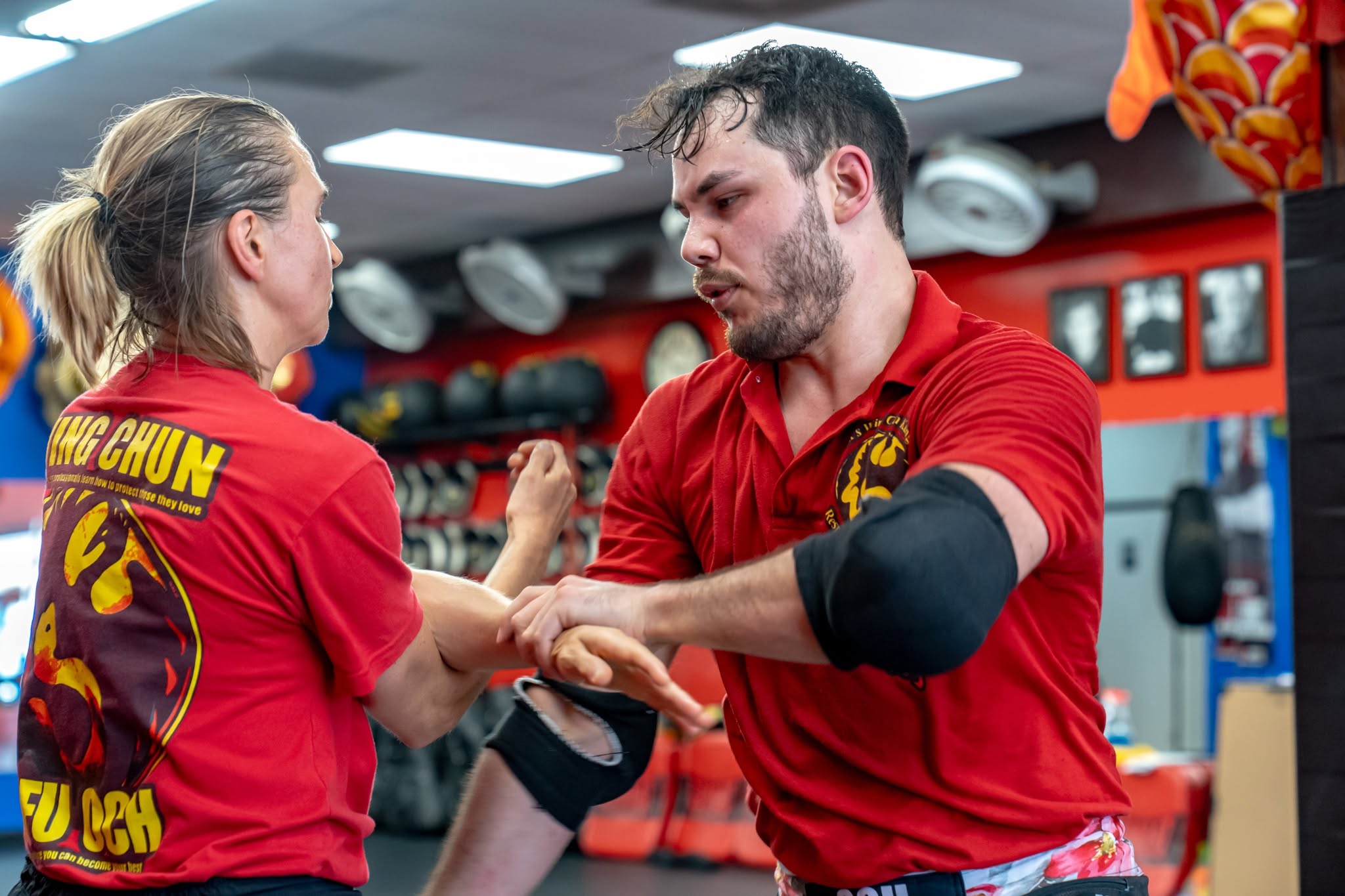
With so many fitness courses and martial arts gyms around in 2026, it can be hard to cut through the noise to really figure out what effective options are out there for useful self defense. MMA, Muay Thai, or even Boxing are common options, but Wing Chun Kung Fu is a powerful contender.
Originally established as a fighting system during war, Wing Chun Kung Fu is a fast, powerful, and adaptive style of martial arts for fighters of all shapes and sizes.
Choose Wing Chun For Useful Self Defense in 2026
The world is an unpredictable place. It’s our philosophy that individuals should walk through it with the proper knowledge and skills to defend themselves. Outside of the health and fitness benefits, self defense skills keep you prepared. It’s better to have the skills and not need them, than need them and not have them.
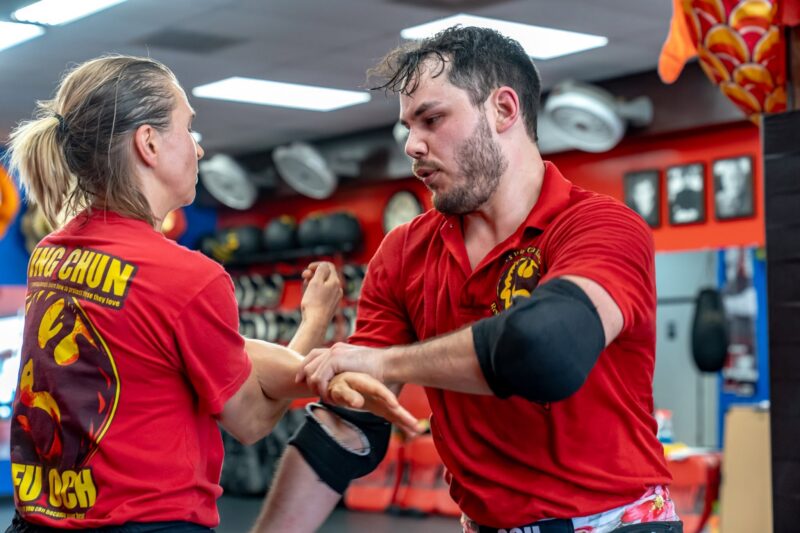
There is an important difference between knowing martial arts techniques and knowing how to protect yourself when a situation becomes chaotic.
Real confrontations rarely happen under perfect conditions. There may be no warning, no referee, no gloves, and no comfortable amount of space. You could be standing in a parking lot, walking to your car, leaving a restaurant, traveling, or simply going about your normal day when circumstances suddenly change. That uncertainty is exactly why practical training matters. A strong defensive system should teach more than punches and kicks. Students need to develop awareness, reactions, movement, balance, timing, distance management, and the ability to make decisions while experiencing pressure.
You also need options.
Not every confrontation requires the same response. Sometimes the smartest decision is recognizing trouble early and leaving. Other situations may require creating space, protecting another person, escaping a grab, defending against an incoming attack, or responding aggressively enough to create an opportunity to get away. The goal isn’t looking impressive. The goal is getting home safely.
One of Wing Chun Kung Fu’s greatest strengths is its emphasis on efficiency. Instead of assuming that the stronger, larger, or more athletic person will automatically win, Wing Chun teaches students how structure, positioning, timing, angles, and intelligent movement can help overcome physical disadvantages. That matters because you don’t get to choose the size of a potential attacker.
A smaller person may need to defend against someone taller. An older practitioner may encounter someone younger. A woman may need to protect herself against a physically stronger man. Even a trained martial artist could find themselves dealing with someone who outweighs them considerably.Wing Chun therefore emphasizes economical movement rather than unnecessary motion. Students learn to protect vulnerable targets, maintain structure, attack efficiently, control critical lines, and react rapidly when distance collapses. There is a raw simplicity behind the philosophy: don’t waste movement when circumstances are already moving dangerously fast.
Wing Chun Training for Real-World Situations
Distance is one of the most misunderstood parts of personal protection. Combat sports often begin with two competitors facing one another at a predictable distance. Outside the gym, an aggressive encounter could begin considerably closer. Someone may already be within arm’s reach. That person could be shouting, pushing, grabbing, intimidating, or moving toward you before the situation becomes obviously physical. Wing Chun places significant attention on close-range combat, where reactions, structure, hand positioning, and immediate control become incredibly important.
Students can develop tools for striking, defending, trapping, redirecting pressure, controlling limbs, and maintaining their position when an opponent is dangerously close.Wing Chun’s famous centerline principles also encourage practitioners to understand where attacks can travel and how they can protect important targets while creating direct paths for their own counterattacks.
Rather than relying entirely on muscular strength, the practitioner learns to use mechanics intelligently. Knowing a technique and being able to perform that technique against resistance are also two very different things.
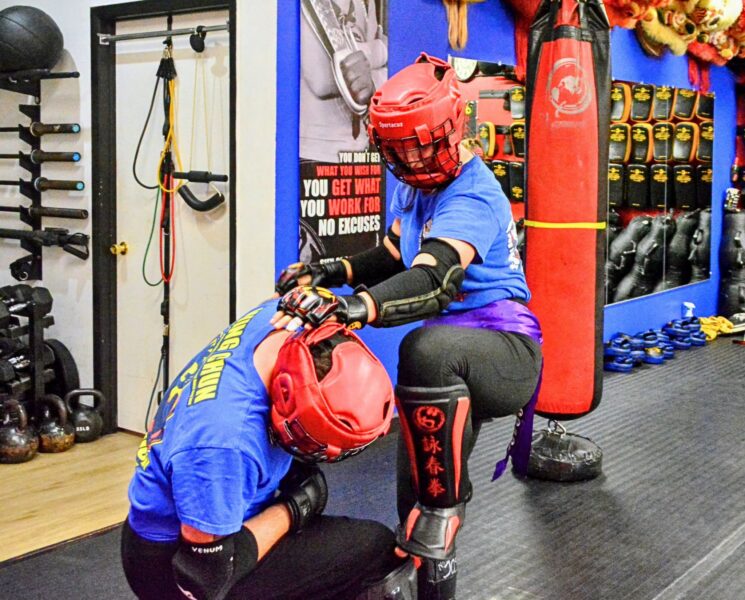
This is where training needs to become uncomfortable—in a controlled and responsible way. Students need opportunities to experience resistance, unpredictability, changing speeds, pressure, and the emotional intensity that comes when another person isn’t cooperating.
Training should help students become increasingly comfortable operating inside that discomfort. Progressive partner drills, reaction exercises, controlled sparring, striking practice, scenario training, and other forms of pressure testing can help bridge the enormous gap between memorizing movements and actually applying skills. The objective isn’t to create fear. It is to replace panic with experience. When you’ve encountered controlled pressure repeatedly in training, you have an opportunity to develop calmer reactions, sharper judgment, and greater confidence.
Awareness is another critical component. One of the best fights is the fight you recognize early enough to avoid. Understanding your surroundings, noticing unusual behavior, recognizing escalating aggression, maintaining appropriate distance, and identifying exits can give you valuable time before physical action becomes necessary. Sometimes a few seconds are priceless. Awareness doesn’t mean living frightened or suspicious of everyone around you. In fact, good training should ideally accomplish the opposite. Preparation can allow you to move through life with greater confidence because you’re paying attention rather than constantly worrying about what might happen.
There is a powerful difference between paranoia and awareness.
One is driven by fear. The other is driven by preparation.
Building Strength, Confidence, and Preparedness
Physical conditioning absolutely has value. Strength, cardiovascular endurance, mobility, coordination, and explosive power can all improve someone’s ability to perform. But a personal protection system cannot assume you’ll always be stronger. That’s especially important for people searching for martial arts later in life or anyone concerned about dealing with a larger aggressor.
Good body mechanics can make movements stronger. Proper positioning can reduce an attacker’s advantages. Timing can allow a smaller movement to accomplish more. Sensitivity can help a practitioner recognize changes in pressure quickly.
Wing Chun practitioners work to develop these attributes so their responses become increasingly natural rather than forced. This doesn’t make size and strength meaningless. They matter. It means training should give you additional tools when strength alone isn’t enough. Martial arts can also create tremendous confidence, but meaningful confidence isn’t about believing you’re invincible. It’s knowing you’ve worked.
Training can influence how you carry yourself, how you respond to stressful situations, and how willing you are to remain composed when something unexpected happens. There is also something deeply empowering about knowing that you are actively improving your ability to protect yourself and the people you love.
Consistent martial arts practice can challenge cardiovascular endurance, muscular stamina, coordination, mobility, balance, speed, and reaction time. Unlike repetitive workouts that some people struggle to stay motivated to complete, martial arts gives physical exercise another purpose: you’re developing a skill.
Every class becomes an opportunity to improve. Techniques that once felt awkward begin to feel instinctive. Those small victories accumulate. For many students, that process makes training exciting because there is always another level of understanding to pursue.
Nobody can guarantee what will happen tomorrow. That’s precisely why preparation matters. Personal protection can be viewed through a similar lens. Learning how to recognize danger, control distance, protect yourself, strike effectively, respond under pressure, and escape threatening situations gives you options you otherwise wouldn’t have.
Wing Chun Kung Fu offers a fascinating combination of traditional martial arts principles and direct fighting concepts built around efficiency, adaptability, close-range movement, and intelligent use of the human body. But effective training ultimately goes beyond collecting techniques.
It is about building awareness, developing reactions, learning how you behave under pressure, becoming physically stronger and mentally calmer, and gaining the confidence that comes from knowing you have invested serious time into becoming harder to intimidate, harder to overwhelm, and better prepared to protect yourself and those who matter most.
You cannot control everything that happens around you.
You can control how prepared you are when it does.

Want to Get Started?
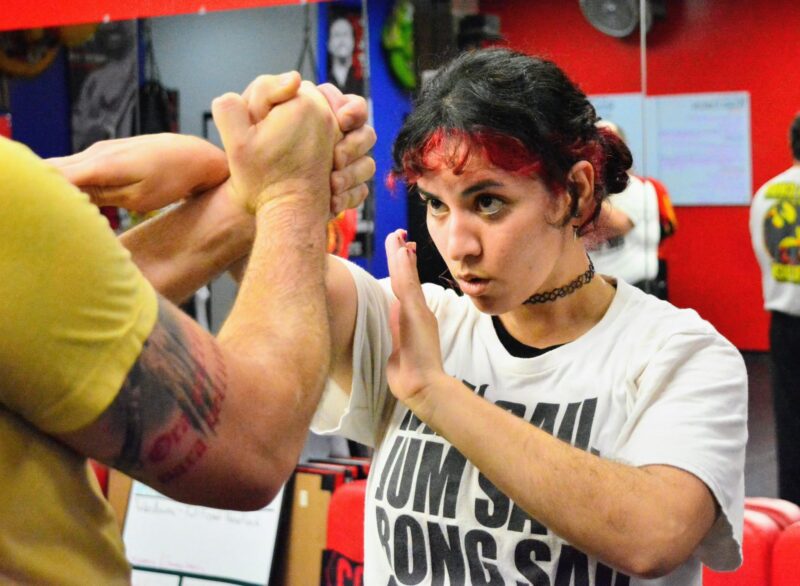
Join Sifu Och Wing Chun today and embark on your journey through the world. Fill out our contact form to discover why we are your best choice for Wing Chun Kung Fu and martial arts training in Lakeland, Florida!