
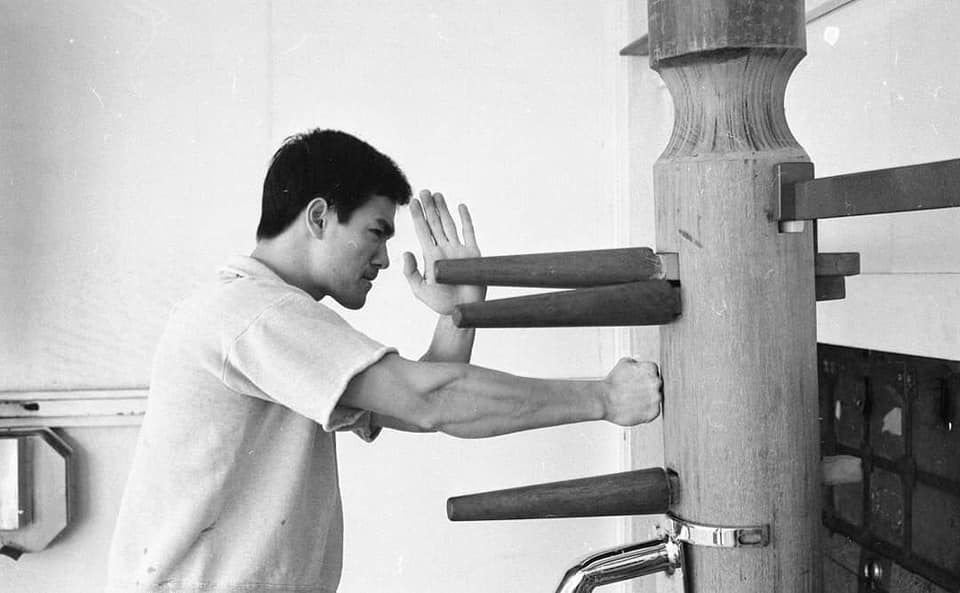
One of the many unique aspects of Wing Chun Kung Fu is the differences and similarities between each lineage of the art. But what exactly is Wing Chun? For those who are unfamiliar, many traditional styles of martial arts rely on elaborate movements or acrobatic techniques. Wing Chun is built around redirection and speed.
Which makes it an effective style for realistic self defense. Its also unique in its appeal. Wing Chun is a great style for lighter-weight fighters like teens, women, and even kids (if they train correctly). This is not only because of its practicality in self-defense (as mentioned above) but also due to its variety of sub-styles through lineages.
How and Why Was Wing Chun Created?
Wing Chun originated in southern China. Most historical accounts places its development during the early Qing dynasty. While the exact history is debated even today, a popular legend attributes the creation of Wing Chun to a Buddhist nun named Ng Mui. She is said to have developed the system after observing the efficient movements of animals, particularly a crane and a snake, distilling combat into its most essential elements.
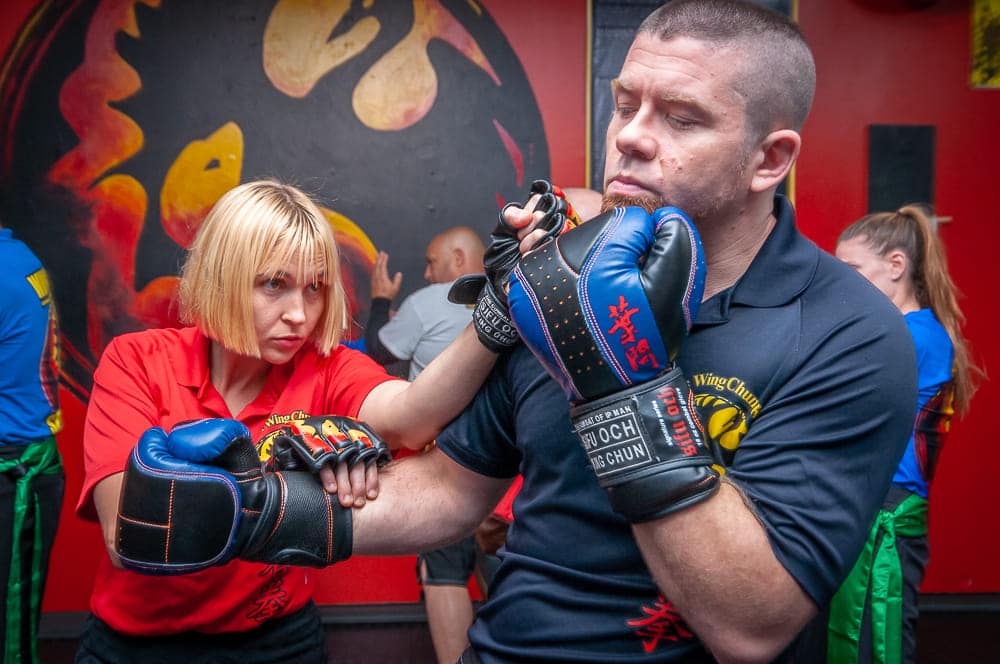
Wing Chun’s core philosophy centers on simplicity and efficiency. Rather than meeting force with force, practitioners are trained to redirect energy, exploit openings, and strike along the most direct path. This principle is often described as “the straight line is the shortest distance between two points.” Techniques are designed to minimize wasted movement, allowing practitioners to respond quickly.
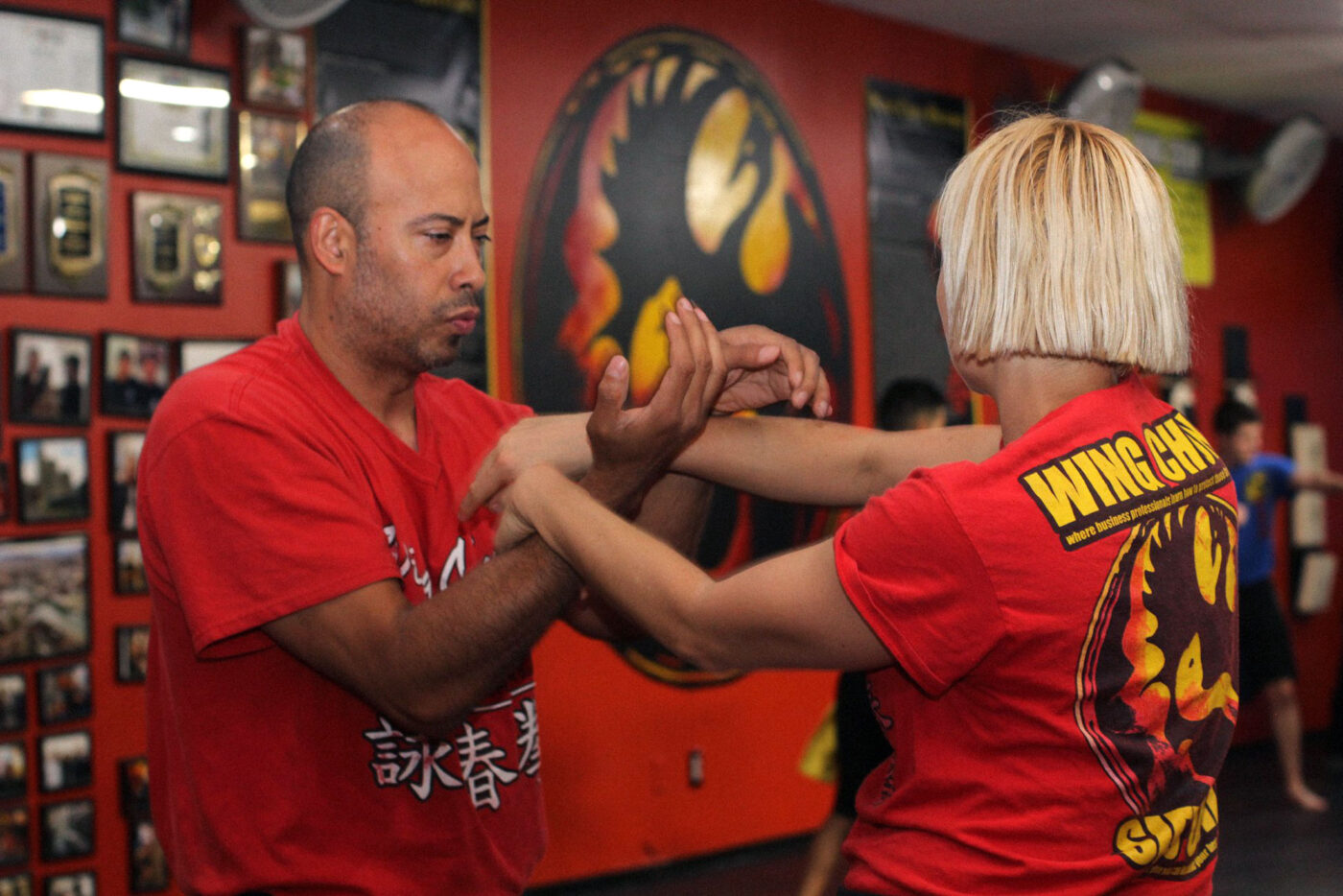
Another defining feature of Wing Chun is its focus on structure and alignment. Proper body mechanics allow a smaller practitioner to generate significant power without relying on brute strength. Sensitivity training, especially through exercises like Chi Sau (sticky hands), teaches practitioners to read an opponent’s intentions through touch, making reactions almost instinctive.
Core System and Training
Wing Chun training is traditionally organized into forms, drills, and applications. The three empty-hand forms: Siu Nim Tao, Chum Kiu, and Biu Jee. They progressively teach structure, movement, and reactive techniques. Siu Nim Tao focuses on foundational concepts such as stance, relaxation, and basic hand techniques. Chum Kiu introduces footwork, turning, and coordination between upper and lower body. Biu Jee covers more advanced techniques, including recovery from compromised positions.
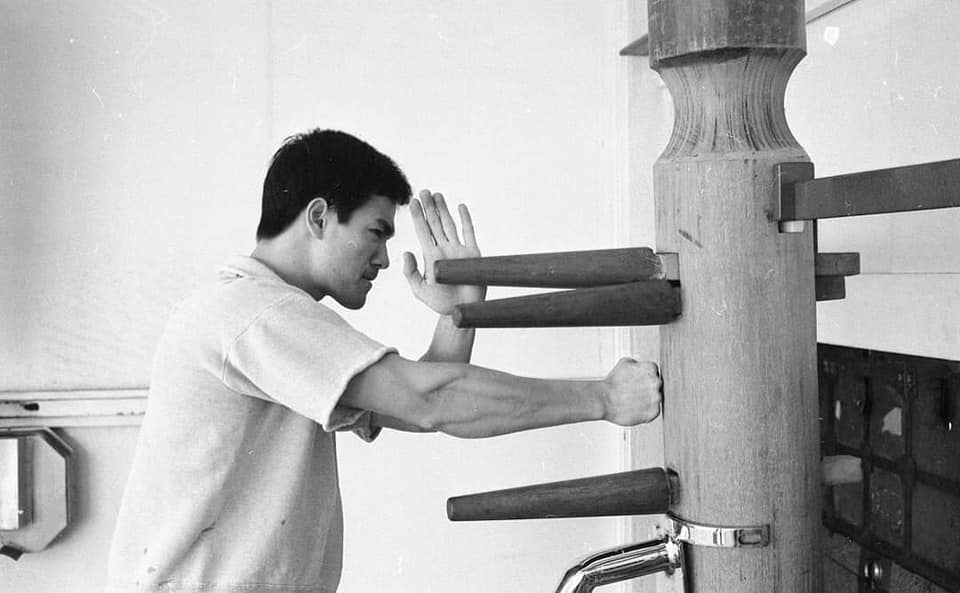
In addition to empty hand forms, Wing Chun includes weapons training, typically the wooden dummy (Muk Yan Jong), the long pole (Luk Dim Boon Kwun), and the butterfly swords (Baat Jaam Do). These elements further refine timing, distance, and precision.
Chi Sau is perhaps the most distinctive training method in Wing Chun. It is a partner drill that develops tactile reflexes, allowing practitioners to maintain constant contact and respond fluidly to changes in pressure and direction. Rather than relying solely on visual cues, practitioners learn to “feel” their opponent’s movements.
The Emergence of Lineages
As Wing Chun spread beyond its original region, different lineages emerged, each shaped by the interpretations and experiences of individual masters. These lineages share common roots but often differ in emphasis, training methods, and technical details.
One of the most influential figures in modern Wing Chun history is Ip Man, who played a key role in bringing the art to Hong Kong in the mid-20th century. From there, Wing Chun gained international recognition, particularly through his students, many of whom went on to establish their own schools and interpretations.
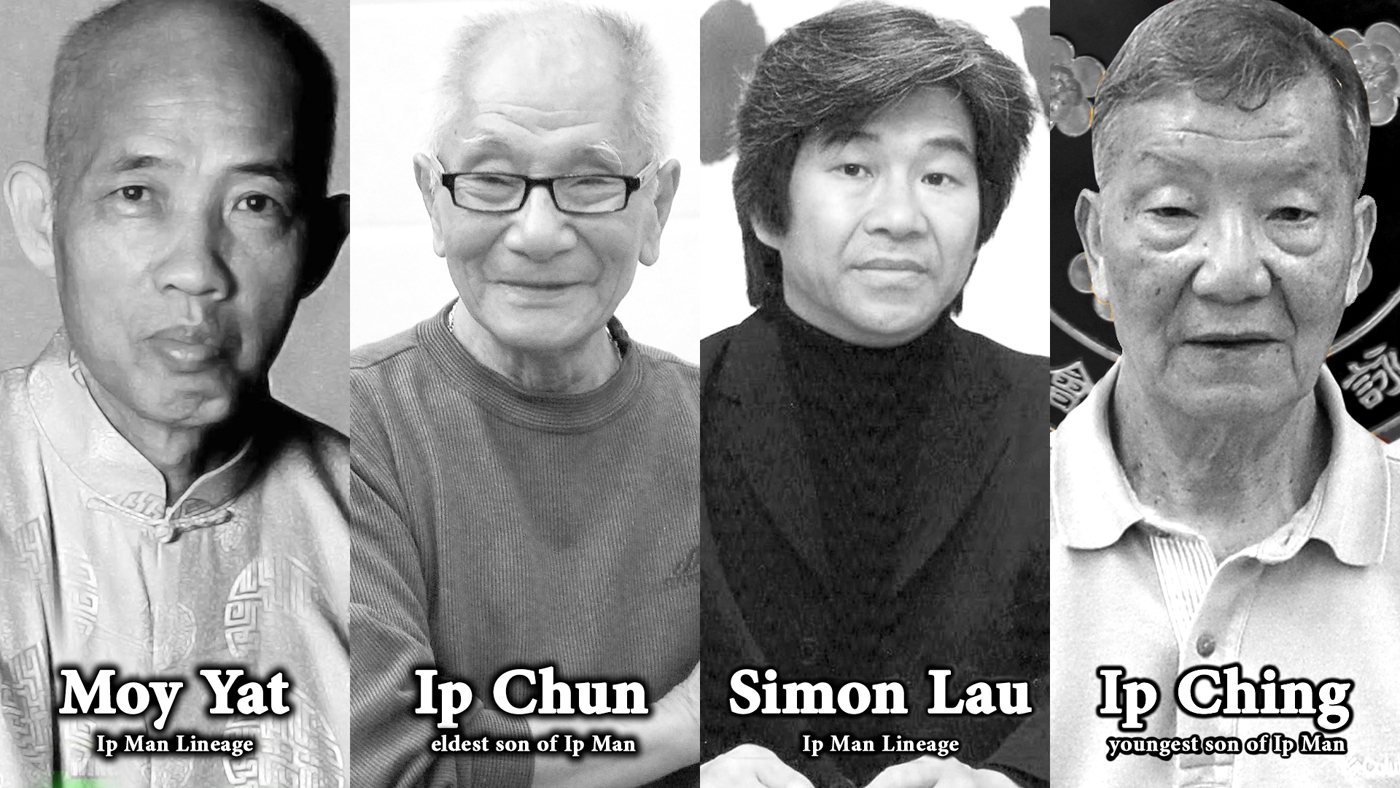
Ip Man Lineage
The Ip Man lineage is arguably the most widely practiced today. It emphasizes relaxed power, centerline control, and efficient striking. Within this lineage, there are further branches based on Ip Man’s students.
Some practitioners focus on maintaining a traditional approach, adhering closely to the forms and methods taught by Ip Man. Others have adapted the system to modern contexts, incorporating sparring, cross-training, and scientific analysis of movement.
Differences within the Ip Man lineage can include variations in stance, hand positioning, and the execution of techniques. For example, some branches emphasize a narrower stance for mobility, while others prioritize a more rooted structure for stability.
His most famous student, Bruce Lee went on to even create his own style of martial arts, which has a lot of similar foundations to wing chun: Jeet Kune Do. While it’s adaptability and speed is similar to Wing Chun, JKD is more focused on long range tactics.
Yuen Kay-San Lineage
The Yuen Kay-San lineage traces back to Foshan, one of the original centers of Wing Chun development. This lineage is known for its refined structure and detailed approach to internal mechanics. Practitioners often place a strong emphasis on precision and subtlety, with techniques executed in a controlled and methodical manner.
Compared to the Ip Man lineage, Yuen Kay-San Wing Chun may appear more conservative in its evolution, preserving older training methods and concepts. Its practitioners often focus on developing deep understanding through slow, deliberate practice.
Moy Yat Lineage
At the age of nineteen, Moy Yat and his family moved to Hong Kong and he began training directly under Ip Man. At twenty-four, he earned the title of Sifu and began teaching his own students.
Moy Yat continued to teach in Hong Kong for over a decade. In 1973, following Grandmaster Ip Man’s death the year before, Moy Yat and his family immigrated to the United States. He joined his brother, Yit-Dean Moy, in New York city and began teaching Wing Chun in America. Throughout his career he travelled broadly, teaching at seminars and workshops across the United States, Canada, Brazil and England.
In comparison to Ip Man, Moy Yat’s wing chun is heavily based on structure and is often touted as a more “traditional” style of wing chun kung fu. Additionally, he was known for teaching wing chun as a philosophy as well, not just a fighting style. Taking the adaptive and redirective nature of wing chun and applying it to every day life.
Ip Ching Lineage
Grandmaster Ip Ching is the youngest son of the late Grandmaster Ip Man and was born in Foshan, China in 1936. Compared to his brother, Ip Chun, Ip Ching was more known for taking on very few students. Focusing on the refinement and details of Wing Chun as opposed to broad strokes and basic techniques within the lineage.
It’s said that his wing chun techniques were more focused on effective fighting rather than “traditional” wing chun. Which is to say, adaptions were made over time to address the functionality of wing chun, incorporating new principles for a more useful art in self defense training.
Pao Fa Lien Lineage
Pao Fa Lien Wing Chun is a lesser-known but historically significant lineage. It is often associated with a more internal approach, emphasizing energy development and subtle body mechanics. Practitioners may focus on cultivating sensitivity and control to a high degree.
This lineage highlights the diversity within Wing Chun, showing how different interpretations can emerge from the same foundational principles. While not as widespread as other branches, it offers valuable insight into the art’s depth and complexity.
Ip Chun Lineages
According to Wikipedia: In 1967, Ip began teaching Wing Chun in Hong Kong and some of his first students, such as Leung Chung-wai and Ho Kay, chairman of Wing Chun Ip Chun Academy and a student of Ip for three decades, still train with him at present.
With the death of Ip Man in December of 1972, the film footage of his Siu Nim Tao, Chum Kiu and Muk Yan Jong forms were entrusted to his sons for posterity, so that they would continue teaching his legacy. In 2014 Ip Chun was selected as a nominee to represent Wing Chun as the inheritor of the legacy of Wing Chun-style kung fu.
Ip Chun focused on teaching as many students as possible. Traveling worldwide teaching seminars. His goal was to take the knowledge his father bestowed to him, and pass it on to as many students as possible. In comparison to his brother, Ip Ching, Ip Chun’s teachings remained more true to the “traditional” teachings of wing chun.
Modern Evolution and Global Spread
As Wing Chun has spread around the world, it has continued to evolve. In many countries, practitioners have adapted the system to suit contemporary needs, incorporating elements such as protective gear, competitive sparring, and cross-disciplinary training.
Some modern schools emphasize self-defense applications, focusing on realistic scenarios and practical techniques. Others explore Wing Chun as a form of personal development, highlighting its meditative aspects and the cultivation of awareness.
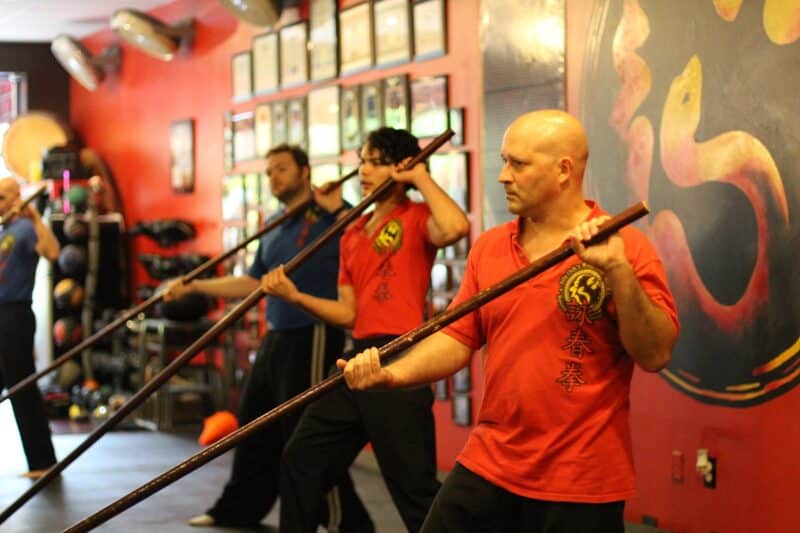
The rise of media and popular culture has also played a role in Wing Chun’s global popularity. Martial arts films and demonstrations have introduced the style to new audiences, sparking interest and inspiring practitioners to explore its teachings.
Differences and Common Ground
Despite the variations among lineages, all Wing Chun systems share a common foundation. Principles such as centerline control, economy of motion, and simultaneous attack and defense are present across the board. These core ideas serve as the unifying thread that connects different branches of the art.
The differences between lineages often reflect the priorities and experiences of their respective teachers. Some may emphasize structure and form, while others focus on adaptability and application. These variations can enrich the practice, offering multiple perspectives on the same underlying concepts.
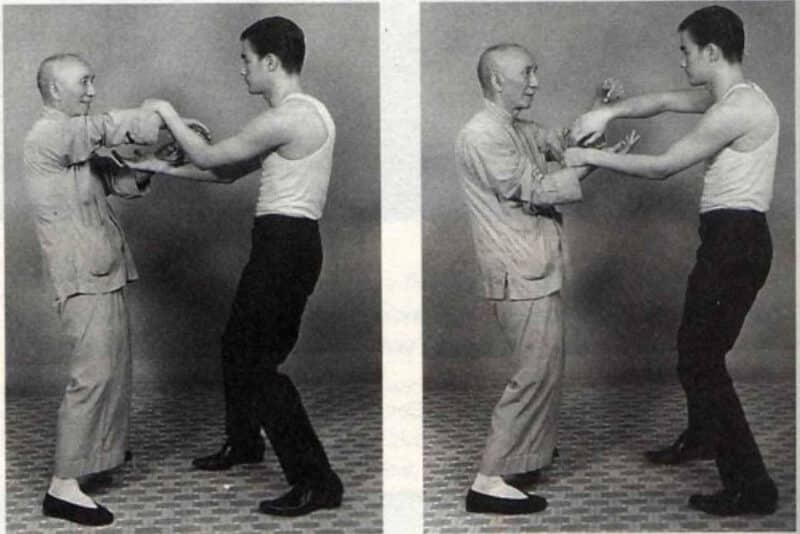
At the same time, differences can sometimes lead to debate among practitioners, particularly regarding which approach is more effective or authentic. However, many modern practitioners recognize that each lineage has its own strengths and that understanding multiple perspectives can deepen one’s appreciation of the art.
Want to Learn More?
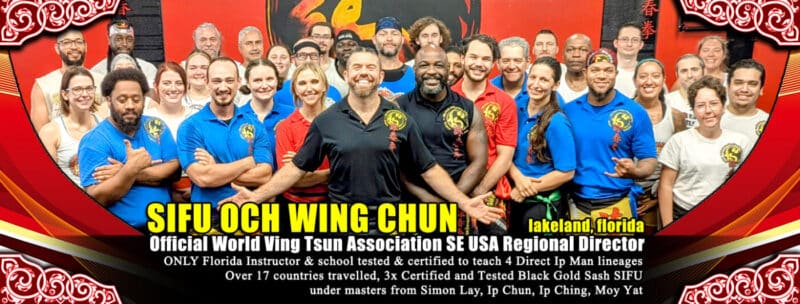
More than just a martial art; it’s a way of life. At Sifu Och Wing Chun Kung Fu Academy, we help students harness their full potential, both physically and mentally. Whether you’re looking to master martial arts techniques or improve your self-defense skills, we’re here to guide you on your journey.