
Everything in Wing Chun revolves around “the centerline”. What is the centerline? Imagine a vertical line running down the middle of the body. Attacks move along this line as it is the shortest path to the opponent. Techniques are designed to be simultaneous. Meaning you’re blocking and attacking at the same time. This is different compared to systems like Karate or Tae Kwon Do, where you block first and attack second in a follow up move.
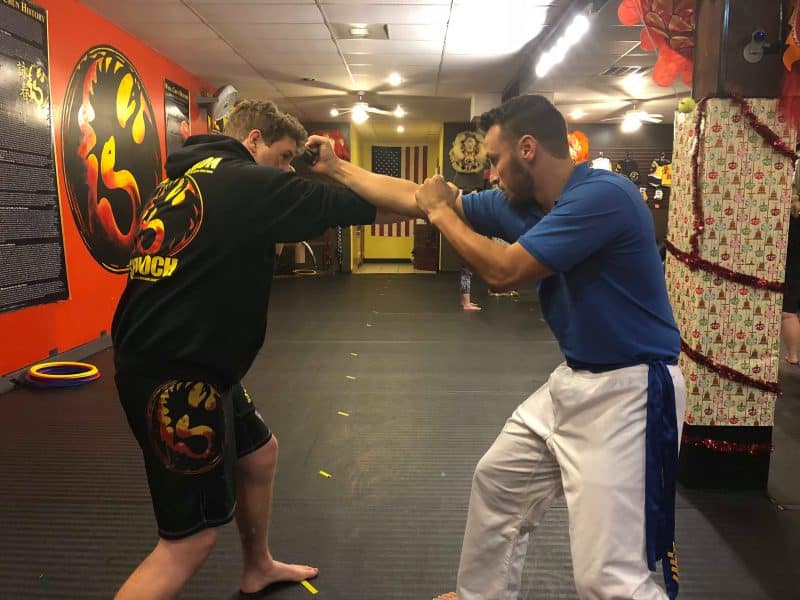
Hand Techniques (Kuen Kuit Core)
Hand techniques are the heart of Wing Chun. They are divided into strikes, blocks (more accurately deflections), and control/trapping motions.
Striking techniques include the straight punch (chain punching), palm strikes, and finger thrusts. The vertical fist punch is the most iconic (with the “one inch punch” being also famous). It’s delivered rapidly in succession while maintaining forward pressure. Palm strikes are used when more surface area or shock is needed, while finger thrusts target vulnerable areas like the eyes or throat.
Defensive hand shapes are not blocks in the traditional sense, rather, they redirect incoming force rather than stopping it. Key examples include:
- Tan Sau (mid pal block)
- Gan Sau (low palm block)
- Biu Sau (high palm block)
- Bong Sau (“wing arm”, used to deflect force outward and open the outside of an opponent)
- Fook Sau (controlling hand that maintains contact and pressure)
These shapes are not static positions but transitional tools that change fluidly depending on pressure and angle. It should also be noted that this is not an exhaustive list either. There are many types of hand movements (both blocking and attacking) in wing chun. If you’re interested in learning more, we can help!
Trapping techniques are another common tactic in wing chun. These are used once contact with the opponent is is made. The goal is to immobilize or control the opponent’s limbs while striking. Techniques like Pak Sau (slapping hand) and Lap Sau (pulling hand) create openings by disrupting the opponent’s structure. Trapping is not about holding (as that opens a wing chun practitioner to counter attacks) but about momentary control to create immediate forward pressure.
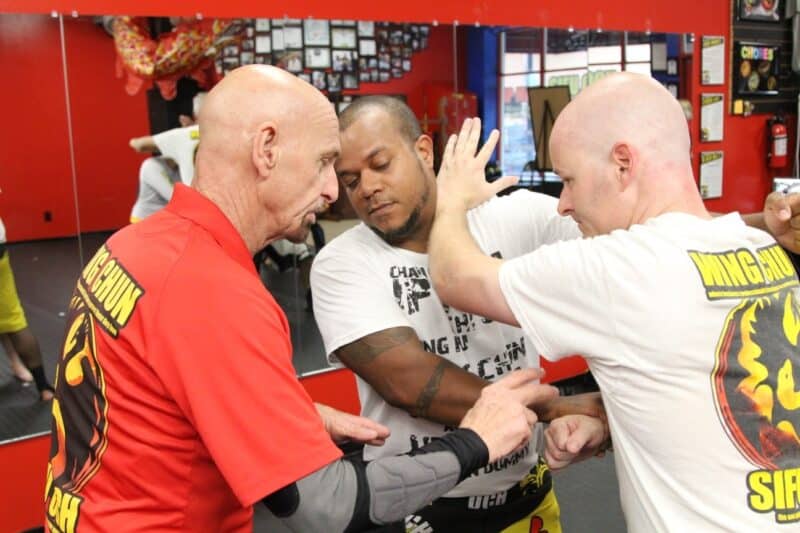
Chi Sau & Sensitivity Drills
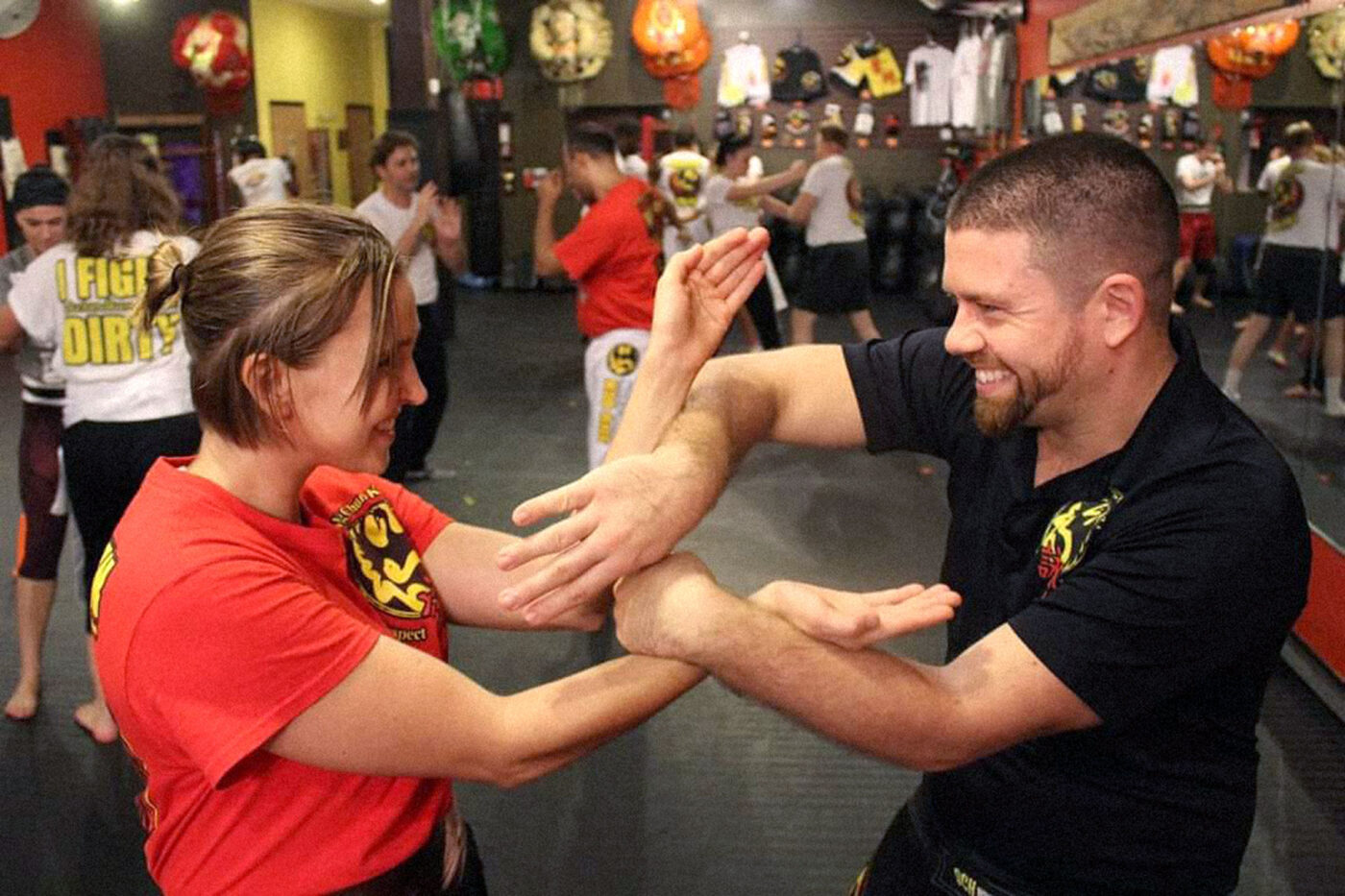
Another famous aspect of wing chun are sensitivity drills, most famously developed through Chi Sau (sticky hands). Rather than relying on sight, practitioners learn to feel changes in pressure and respond instantly.
Through Chi Sau, techniques become reflexive. For example, if forward pressure disappears, a strike is launched automatically. If resistance increases, it is redirected. This makes Wing Chun techniques adaptive rather that a series of static techniques and strategies.
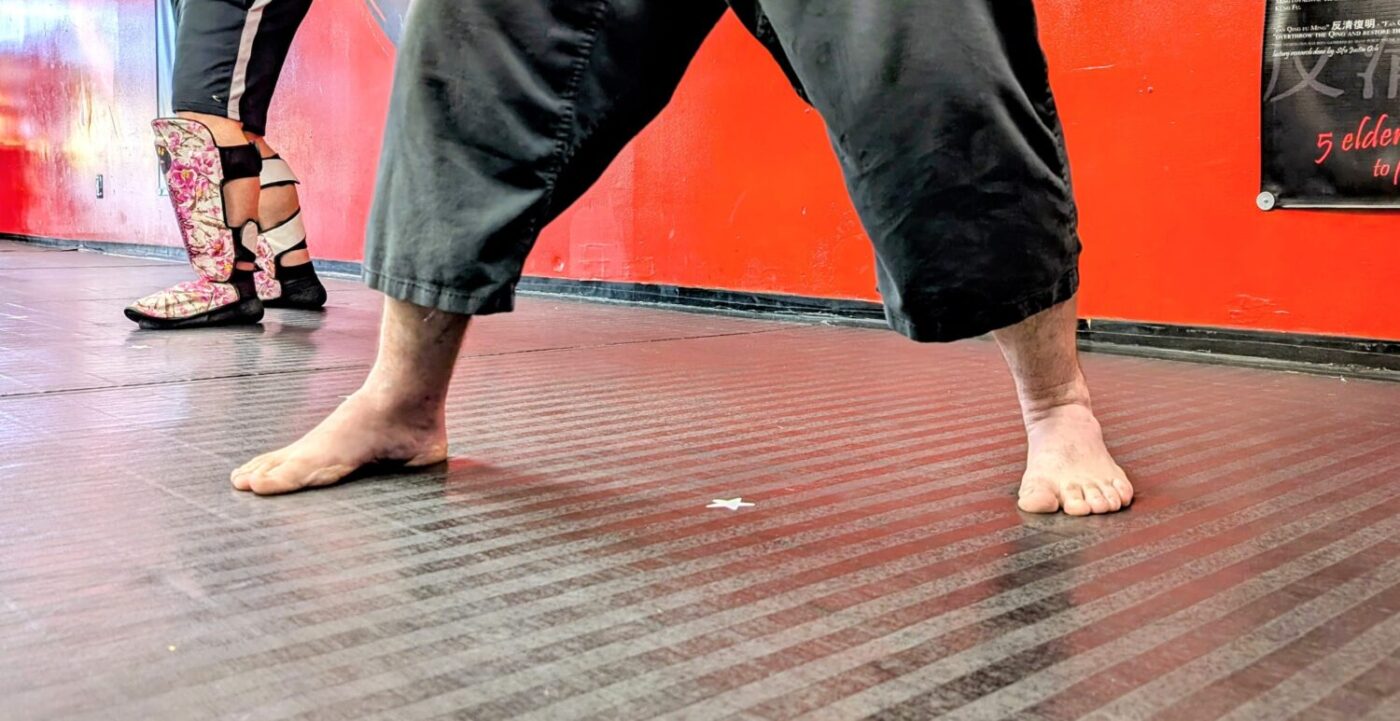
Footwork and Stances
Wing Chun footwork is often very underrated when discussing the martial art. But it does almost all of the heavy lifting when it comes to using wing chun correctly. The primary stance, “Yee Jee Kim Yeung Ma”, emphasizes stability, inward knee tension, and centerline protection. However, the system is not static. Mobility is introduced through stepping (such as triangle stepping) and turning into technqiues like the tan, gan, or biu sao.
Turning (Chum Kiu concept) allows the practitioner to redirect force using the whole body rather than just the arms. This generates power and improves positioning.
Stepping techniques include advancing, retreating, and angling. Unlike wide, circular movements in some martial arts, Wing Chun steps are small and efficient, maintaining balance and readiness to strike.
Kicking Techniques
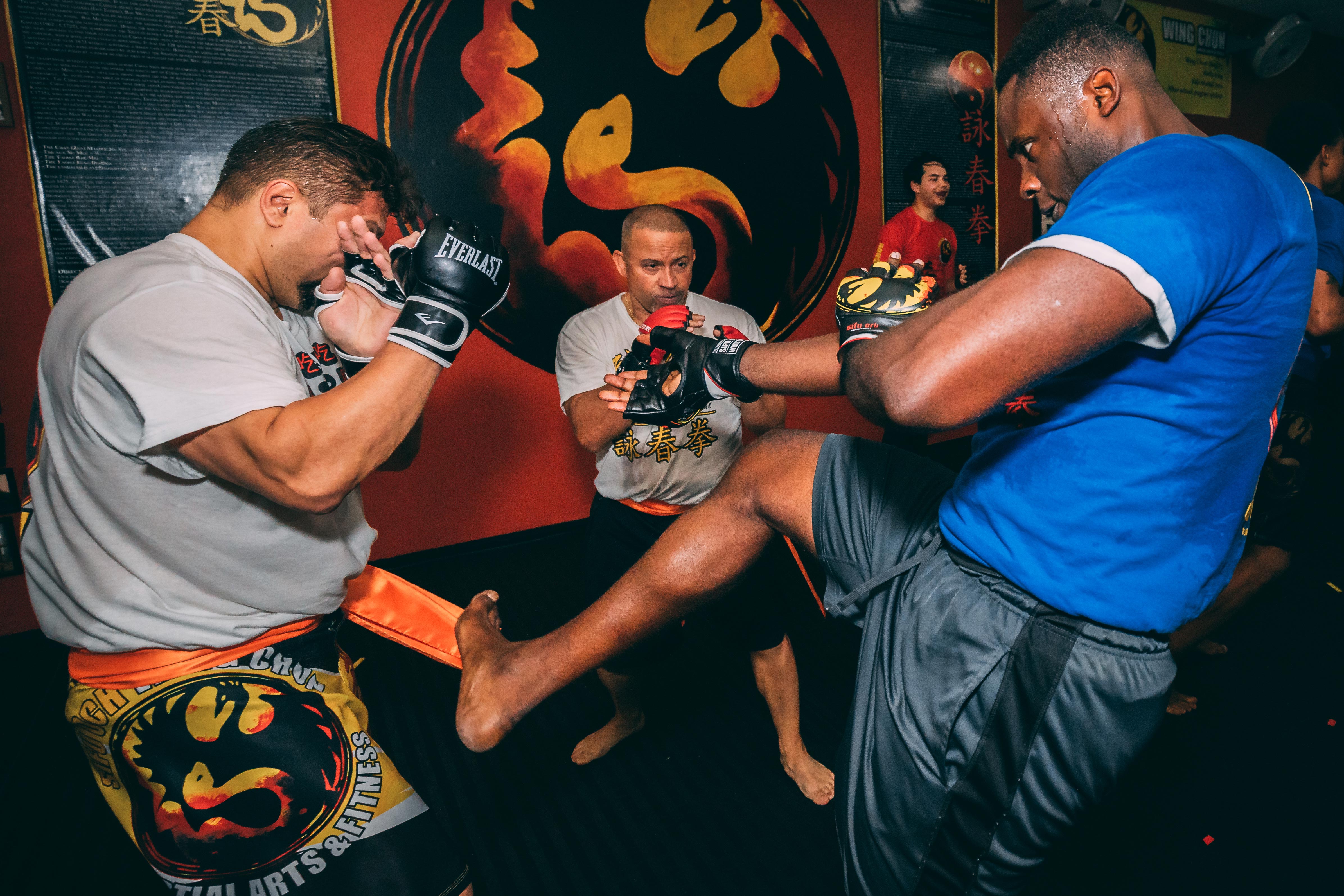
When it comes to the basics of Wing Chun, most offensive and defensive techniques are done with the upper body. The lower body’s focus is on footwork and keeping a stance that reinforces punches and blocks. When it comes to more advance training, Wing Chun kicks are typically low, fast, and practical. They target the lower body, like knees, shins, or the groin. This is intentional, as it ensures that kicks follow the main principle of wing chun “keeping to centerline” while also making sure a practitioner doesn’t leave themselves open to an attack.
Common kicks include:
- Front kick (aimed at the knee or midsection)
- Side kick (delivered with minimal telegraphing)
- Stomping kick (used to disrupt balance or damage joints)
Kicks are often delivered simultaneously with hand techniques, reinforcing the idea of attacking and defending at the same time.
Close-Range Fighting
Wing Chun is a close-range combat system. Once inside striking distance, techniques become compact and continuous. The idea is for a practitioner to be unrelenting. Elbows, short punches, and continuous movement of blocking and attacking.
Elbow strikes are particularly important at this range, allowing powerful attacks without needing space. The practitioner maintains forward motion and control. The idea is to constantly be pressuring the opponent and limiting their ability to counter.
Weapons and Wooden Dummy (Muk Yan Jong)
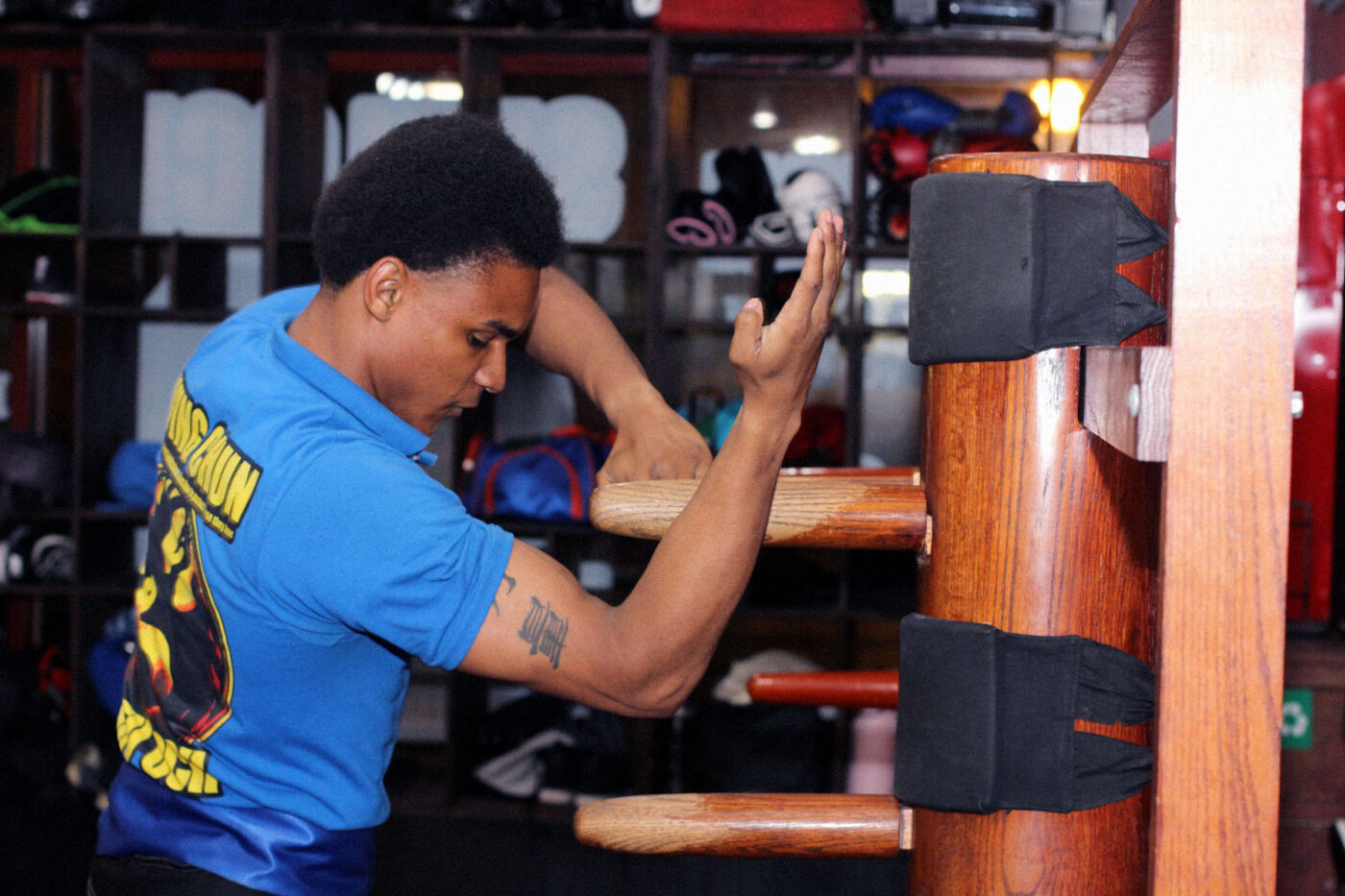
Probably the most iconic element of wing chun, the wooden dummy is a unique training tool. It is meant to refine technique, positioning, and timing. It allows practitioners to practice angles, structure, and transitions in a controlled environment. Additionally, it’s also great for conditioning limbs and improving attack strength.
Techniques on the dummy include combinations of strikes, deflections, and footwork, emphasizing correct spacing and alignment. It bridges the gap between solo forms and partner training.
Weapons Techniques
Traditional Wing Chun includes two main weapons:
- Long Pole (Luk Dim Boon Kwun): Focuses on power generation, stance stability, and long-range striking.
- Butterfly Swords (Baat Jaam Do): Emphasize coordination, speed, and close-range cutting techniques.
While weapons are for more advanced practitioners (and rarely used in actual realistic defense training), they reinforce the same principles found in empty-hand practice and are key to understanding the entirety of wing chun.
The Wing Chun Difference
Wing Chun is unique because of how all these techniques work in unison. Rather than memorizing isolated moves, practitioners learn to respond based on pressure, angle, and position. It is an art of adapting. Building the fundamentals to “free-style” in any given scenario.
For example, a simple exchange might involve a Pak Sau to deflect an incoming strike, immediately followed by a straight punch, transitioning into a trap if resistance is encountered, and finishing with an elbow at close range. Each action flows naturally from the previous one.
Different lineages may emphasize certain techniques over others. Some focus more on trapping, others on striking efficiency or structural alignment. However, the underlying technical framework remains consistent.
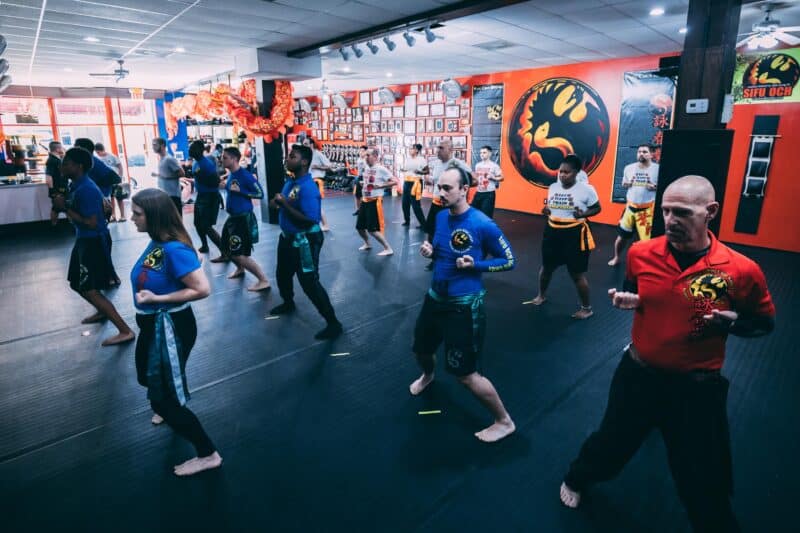
By mastering these concepts, a practitioner can apply Wing Chun techniques fluidly in a wide range of situations, making the art both practical and enduring.
Want to Learn More?
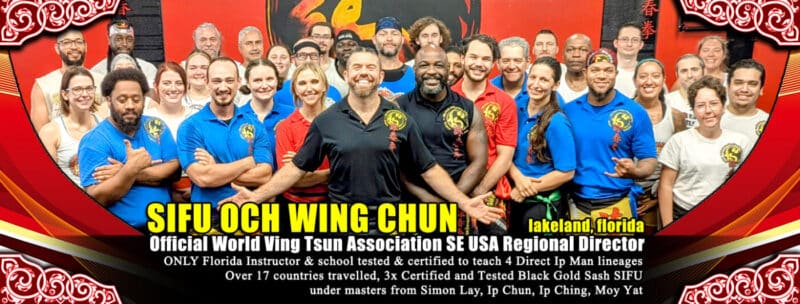
More than just a martial art; it’s a way of life. At Sifu Och Wing Chun Kung Fu Academy, we help students harness their full potential, both physically and mentally. Whether you’re looking to master martial arts techniques or improve your self-defense skills, we’re here to guide you on your journey.
Related Content