

A martial art for personal protection can feel overwhelming. If you are considering Wing Chun, the most useful question is how its principles translate into practical skills. Every school offers a different approach, and impressive demonstrations do not always explain what a beginner will actually learn.
Wing Chun can be a valuable part of self-defense training when students practice with realistic resistance, clear instruction, and an emphasis on escaping danger. Its focus on close-range movement, efficient actions, and protecting the body’s center offers useful tools. However, the quality of instruction and the way students train matter more than the style’s name.

Is Wing Chun Good for Self Defense?
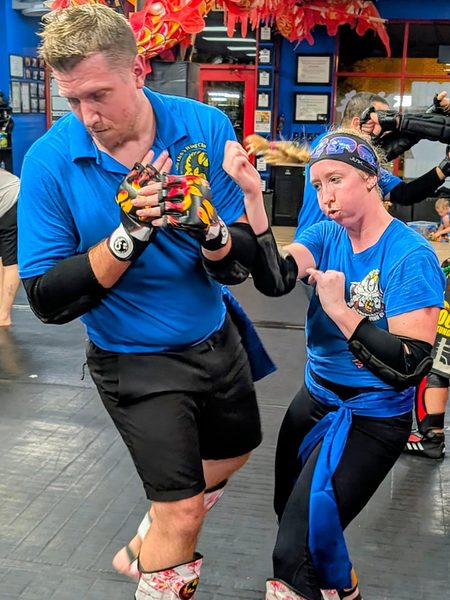
Yes, Wing Chun can help develop skills relevant to personal protection. The answer depends on whether training prepares students for an unpredictable person rather than a cooperative demonstration.
Learning a movement is only the beginning. Students also need to practice recognizing distance, maintaining balance, responding to pressure, and finding an opportunity to leave. A technique that works when a partner stands still may become much harder when that person moves, resists, or changes direction.
A worthwhile program connects its traditional exercises to these practical demands. It should also teach students that avoiding a confrontation is often the safest outcome. Personal safety guidance from Police.uk emphasizes avoiding involvement in violent situations when possible and prioritizing your safety.
Wing Chun Self-Defense: Practical Benefits Every Beginner Should Know
For adults exploring self-defense classes in Lakeland, Florida, understanding both the strengths and limitations of this martial art can help you choose a school with confidence.
Close-Range Skills and Efficient Movement
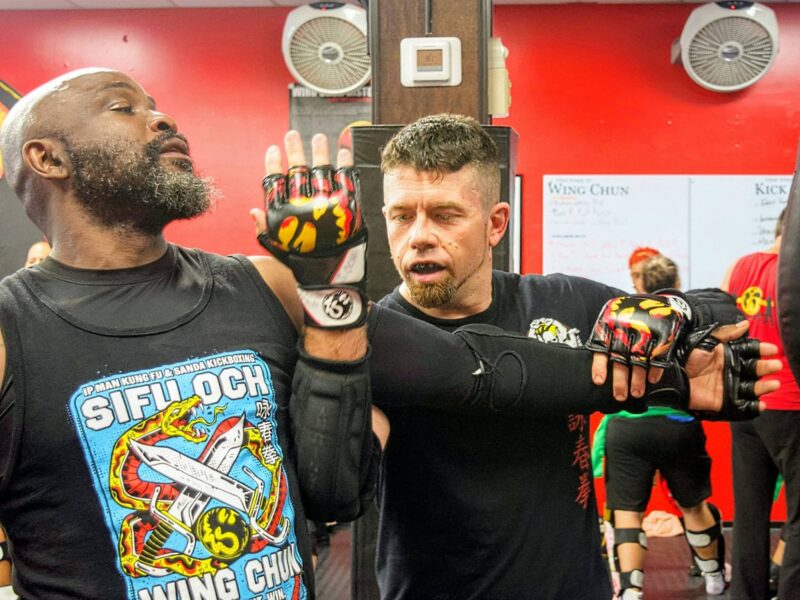
Wing Chun places considerable emphasis on working at close range. Its training commonly explores compact strikes, coordinated defensive movements, and positioning that helps protect the center of the body.
These ideas can be useful when space becomes limited. However, close range also creates challenges: another person may grab, shove, clinch, or attempt to take you down. Students need to understand these possibilities rather than assume that striking practice addresses every situation.
Efficiency is another important principle. Students work toward reducing unnecessary movement and coordinating their actions. This takes repetition and feedback; it does not mean a beginner will automatically react effectively under stress.
Structure, Balance, and Physical Differences
Wing Chun training encourages students to examine how posture, alignment, and positioning affect their movements. Instead of depending entirely on arm strength, they learn to coordinate the body.
This can make training appealing to people with different builds and experience levels. Still, size, strength, fitness, and reach matter in physical encounters. Good instruction acknowledges those differences and helps students adapt.
A responsible school should never promise that a particular technique makes a smaller person unbeatable. The goal is to improve your options and judgment through practice.
What Makes Training Practical?
The strongest reason to choose a school is the quality of its everyday training. Lineage and instructor experience can provide useful background, but students should also observe how lessons progress from learning a movement to applying it.
Look for clear explanations, patient corrections, and opportunities to work with different partners. Ask how the school helps beginners develop skills safely while gradually increasing the challenge.
Progressive Resistance and Controlled Sparring
Cooperative drills help students understand unfamiliar movements. As they improve, partners should introduce appropriate resistance and variation.
For example, a partner might change the timing of an attack, move to a different angle, or resist an attempted control. The purpose is to help students discover what they can apply and where they need more practice.
Controlled sparring can provide another opportunity to explore timing, distance, and decision-making against a moving partner. It should have clear rules, suitable supervision, and an intensity appropriate to the participants.
Sparring is not identical to a real confrontation, but neither are rehearsed drills. A useful program explains what each exercise develops and where its limits are.
Understanding the Role of Chi Sau
Chi sau, often called “sticky hands,” is a partner exercise associated with Wing Chun. It gives students a structured way to explore contact, pressure, positioning, and responses at close range.
It can be a valuable learning tool, but it should not be mistaken for a complete test of self-defense ability. Real encounters do not necessarily begin with established arm contact or follow the exercise’s familiar patterns.
Ask an instructor how chi sau connects to the rest of the curriculum. A clear explanation should show how students carry lessons from the drill into broader practice.
Awareness, Boundaries, and Escape
Physical techniques should sit within a larger approach to personal safety. Students also benefit from discussing awareness, verbal boundaries, de-escalation, and ways to leave a threatening situation.
Scenario practice can connect these decisions to movement. A training exercise might ask a student to recognize an exit, communicate a boundary, and move away rather than continue exchanging techniques.
Some WingTsun organizations explicitly include mindfulness, stress training, escape skills, and scenarios in their self-defense curricula. That demonstrates how broad a program can be, although individual schools vary.

Choosing a Wing Chun School in Lakeland
An introductory class gives you a chance to assess the environment before making a commitment. Pay attention to whether instructors explain the purpose of exercises and whether students treat one another respectfully.
You should feel comfortable asking questions. A thoughtful instructor can discuss both what the training offers and what requires additional practice.
Questions to Ask Before Joining
Ask how beginners progress beyond cooperative drills. Find out whether the curriculum includes controlled sparring, responses to grabs, clinch awareness, and ways to recover if balance is lost.
It is also reasonable to ask how instructors adapt activities for different fitness levels and previous injuries. You should understand participation expectations, contact levels, and how to raise a concern during class.
Be cautious about promises of guaranteed protection or claims that techniques are too dangerous to practice against resistance. Students need a safe way to evaluate their skills and receive honest feedback.
Begin With a Class You Can Attend Consistently
You do not need to arrive with martial arts experience. Start with a willingness to learn, ask questions, and practice regularly. Progress takes time, and no fixed number of lessons guarantees readiness for every situation.
If you are considering Wing Chun classes in Lakeland, contact Sifu Och Wing Chun to ask about beginner training and arrange an introductory visit. Seeing a class firsthand can help you understand the instruction, meet the community, and decide whether the approach fits your self-defense goals.