
What Martial Arts Styles Are Taught in Lakeland, FL?
If you’re searching for martial arts classes in Lakeland, Florida, you’ll discover several different styles. Popular options include Wing Chun Kung Fu, karate, Taekwondo, Brazilian Jiu-Jitsu, boxing, kickboxing, Muay Thai, and mixed martial arts.
Each discipline offers its own approach to movement, fitness, competition, and self-defense. However, choosing the right martial art requires more than comparing uniforms, belts, or fighting techniques.
A better starting point is understanding what you want your training to accomplish.
Are you interested in improving fitness? Do you want your child to develop confidence and discipline? Perhaps your main concern is learning practical self-defense for situations outside a controlled training environment.
These goals can lead to different choices.
For residents of Lakeland and Polk County, understanding the strengths and limitations of each martial art can make that decision much easier.
What Are the Most Common Martial Arts Styles in Lakeland?
Martial arts generally fall into several categories. Some emphasize striking, while others focus on grappling, traditional forms, athletic competition, or practical self-defense.
The most useful distinction isn’t whether a style is traditional or modern. It’s what students actually practice and how they develop their skills.
Wing Chun Kung Fu: Understanding Close-Range Self-Defense
Wing Chun Kung Fu takes a different approach to many of the striking and even ground styles described by most academies.
It’s brutal honesty is fights are messy, and reacting, adapting, and shutting down the assailant down as quickly and brutally as possible is your primary goal. Not points, not competition, not trophies, rather results.
Every time they attack, you should block and attack at the same time, you should be dynamic and be able to react and adapt to a multitude of situations. That is the strength of Ip Man Wing Chun when taught as a complete system of fighting.
Rather than emphasizing elaborate movements or relying primarily on long-distance techniques, Wing Chun focuses on effective ways to stop, control, and defeat assailants quickly. Minimizing the threat and escalation by overhelming the opponent.
Pressure testing to block and attack at the same time, controlling space while maintaining a stand up position for movement and control against one or multiple opponents.
Many martial arts systems train for competition, Wing Chun train for realistic self defense for a street assault, not points. Against ground, Wing Chun wants to stay standing, on the ground against multiple opponents you are at an extreme disadvantage. If an opponent pulls a knife or weapon on the ground this is also a huge issue. As now your focus is on the weapon instead of your movements with or without the uniform applications.
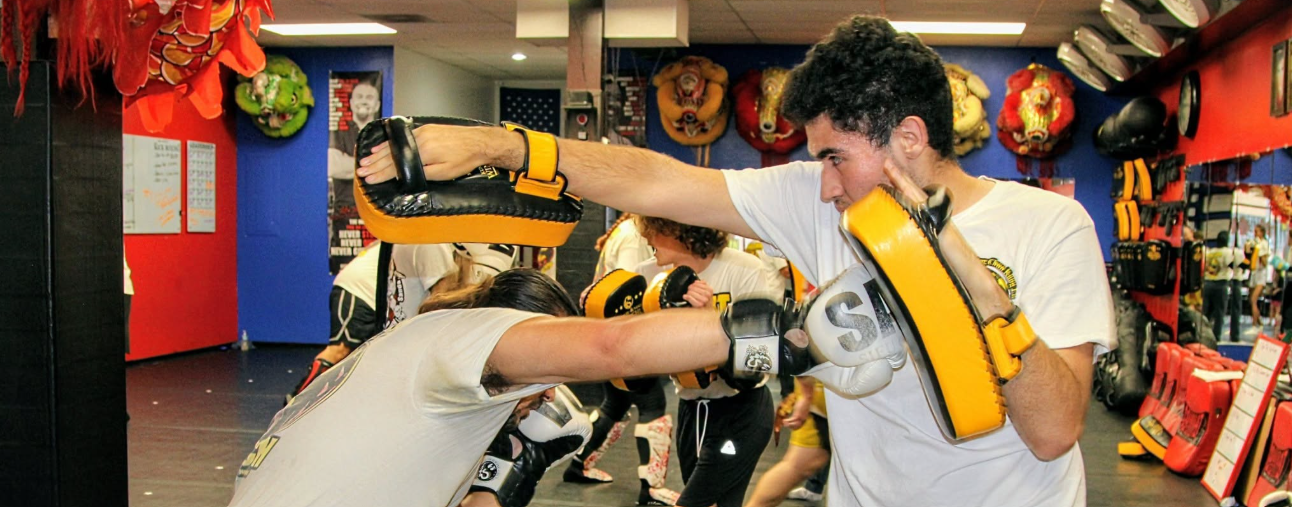
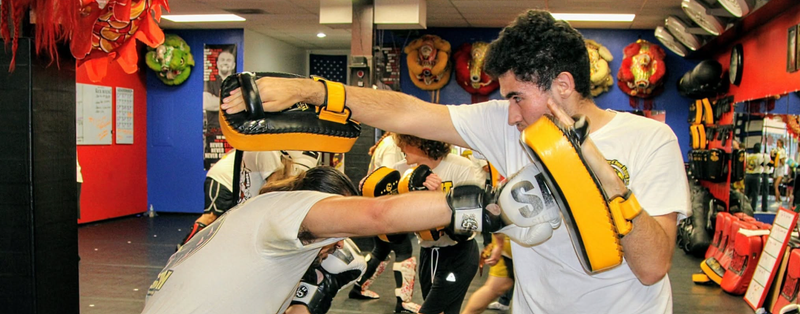
Wing Chun pressure testing against partners, focus mitts, heavy bags, and traditional and modern applications makes the efficient movement, positioning, balance, and controlling incredible within the space between two people.
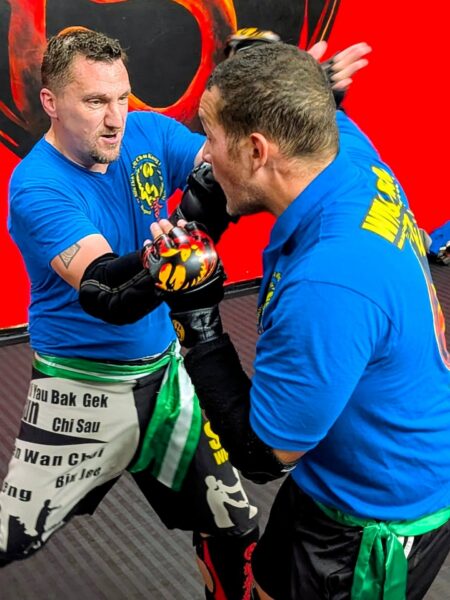
The system is particularly associated with close-range striking, centerline principles, simultaneous defensive and offensive movements, and sensitivity to physical contact.
These concepts become relevant when a confrontation develops at conversational distance.
Consider a common situation: two people argue, one steps closer, and personal space disappears.
There may be little room for a wide kick or extensive footwork. The immediate challenge is managing pressure, protecting yourself, maintaining balance, and finding a safe way to leave.
That is the type of close-range problem Wing Chun training aims to address.
Weaknesses come in picking the an academy that trains Wing Chun Kung Fu like Tai Chi, or as a spiritual or energy martial art instead of its combative aggressive pressure tested roots. These academies typically talk about its effectiveness but don’t spar, train aginst real pressure, heavy bags, and pads. Instead these types of schools focus on Forms, positions, philosophy, theories, instead of what the style was meant for. A combative intense control while blocking and striking at the same time to overwhelm the opponent or opponents. These schools would be considered more spiritual internal “studies” of Wing Chun, and should be avoid if looking for practical training versus the actual Wing Chun system that was created to fight and have brutal aggressive application.
Wing Chun Schools that teach the original and practical brutal combative purpose should be sought after highly. The right academy they will pressure test and train you against one and multiple attackers, against weapons, strikes, kicks, scenarios, and follow ups and competitions are secondary or even lower versus realistic practical training. They won’t talk about spirituallity, internal energy, or religion, theory, or philosophy. Instead they will demostrate, show, and apply everything in the most quick non-complex way possible to shut the assailant down.
Great schools train and spar, work against focus mitts and heavy bags and also train ground defense and prevention as well as tactics to reverse, stop, and prevent scenarios from escalating.
These academies take the full system and teach every fighing and realistic self defense aspect as the primary goals not gymnastic movements, competitions, or point scoring.
Karate: Traditional Striking and Discipline
Karate is a Japanese martial art known for punching, kicking, blocking, and structured technique development.
Many karate programs also emphasize respect, discipline, concentration, and personal achievement through belt progression.
For families seeking an organized activity, karate can provide a clear learning structure.
However, karate training varies significantly between styles and instructors.
Some programs include frequent sparring and practical partner exercises. Others place greater emphasis on forms, demonstrations, or point-based competition.
These activities can develop useful abilities, but they may not fully address close-range grappling, unexpected grabs, or situations that continue after the first exchange.
What to consider: If self-defense is your priority, ask how often students practice responding to realistic pressure, close contact, and changing distances.
Taekwondo: Dynamic Kicking and Athletic Development
Taekwondo is a Korean martial art recognized for its dynamic kicking techniques, footwork, flexibility, and athletic movement.
It can be especially appealing to people who enjoy physical challenges, structured progression, and competitive activities.
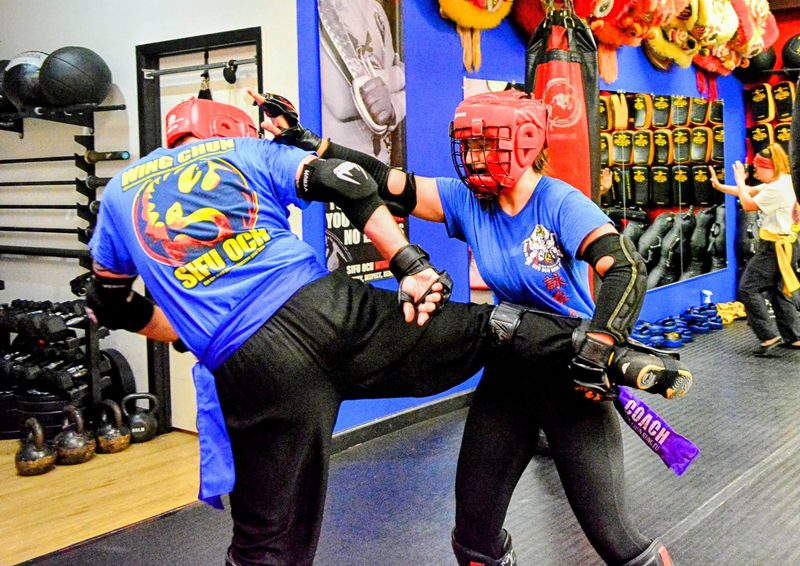
Students often develop balance, coordination, and lower-body control.
Nevertheless, not every Taekwondo program devotes equal attention to punching, clinch situations, or close-range defense. Sport-focused rules may also shape which techniques students practice most often.
This matters because a real confrontation may happen in a crowded area where space for kicking is limited.
What to consider: Look for instruction that explains how students manage distance and respond when an opponent moves inside kicking range.
Boxing: Effective Punching, Footwork, and Timing
Boxing develops punches, defensive movement, footwork, conditioning, and the ability to respond to an active opponent.
Students often practice combinations, evasive movement, and controlled sparring.
These methods can build useful striking skills and comfort under pressure.
However, boxing primarily develops the tools permitted within its sporting rules. It doesn’t generally emphasize defending against kicks, prolonged grappling, or weapon threats.
A skilled boxer may have excellent movement and timing, yet still need additional training for unfamiliar situations.
What to consider: Boxing can provide a strong striking foundation. For broader self-defense goals, investigate whether complementary training addresses grabs, kicks, and close-contact situations.
Weaknesses against ground work, tackles, and kicks can effect a boxers ability to keep their power and their mobility effective, make sure to look for a well rounded academy that teaches how to deal with this.
Muay Thai: Powerful Striking and Clinch Skills
Muay Thai is a striking discipline associated with punches, kicks, knees, elbows, and clinch work.
Its training can develop conditioning, balance, striking technique, and the ability to function under physical pressure.
The clinch is particularly relevant because it teaches students to work at close distance rather than relying entirely on long-range attacks.
Still, a sporting match and a self-defense emergency have different priorities.
Muay Thai competition focuses on overcoming an opponent within agreed rules. Personal safety may require disengagement, awareness of nearby people, and movement toward an exit instead.
Those skills must be trained intentionally rather than assumed.
Mixed Martial Arts: Combining Striking and Grappling
Mixed martial arts, or MMA, combines elements of striking, wrestling, and submission grappling.
A well-structured program can help students become more comfortable with different ranges of unarmed combat.
This versatility is a major advantage.
However, MMA programs also vary in purpose. Some primarily prepare athletes for regulated competition, while others include broader personal-protection instruction.
Competition training can be demanding and technically effective without addressing every practical safety concern.
For example, environmental awareness, verbal de-escalation, weapon threats, and escaping from several people require different training objectives from winning a match.
What to consider: Ask whether a program teaches students to recognize danger, avoid unnecessary confrontation, and disengage when possible.
Brazilian Jiu-Jitsu, No-Gi, and Wrestling: Grappling, Control, and Ground Fighting
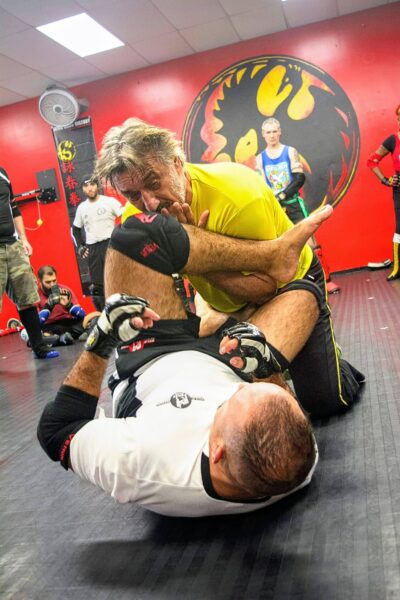
Wrestling, no-gi, Brazilian Jiu-Jitsu, commonly called BJJ, w and Japanese Jiujitsu emphasizes ground grappling, positional control, and submissions.
It teaches students how leverage, body positioning, and technique can help them manage physical resistance.
One of its greatest strengths is the opportunity to practice against resisting training partners. This can develop composure, problem-solving, and an understanding of physical pressure.
However, an important distinction exists between learning to survive on the ground and choosing to remain there during an unpredictable confrontation.
This system uses isometric strength, positions and control to gain advantage on an opponent. Weight classes still exist in every martial art but training ground can limit a large opponents mobility and power when you have the top position.
This can be a issue if the opponent is larger and on top of you striking and also knows ground work. Then it comes down to training and experience.
Knowing and training ground is an essential element and tool for practical combat and knowing ground defense and escapes as well as tactics are invaluable.
Issues can arrise if academies train for competitions only as the main focus instead of real world practical scenarios. In a real confontation if your on the ground more than one attacker may get involved or they pull a knife while you are scrabbling, grabbing, or on the ground.
From Jiujitsu and MMA pioneer Royce Gracie – who voiced real concern that modern training centers have shifted away from real-world self-defense in favor of tournament rules and point-based systems. He points out that while the vast majority of practitioners pick up martial arts to learn how to protect themselves rather than chase trophies, an overemphasis on competitive scoring has disconnected contemporary practice from its original purpose.
When an academy trains primarily for competition this scenario becomes a scrabble for the weapon instead of a new controlling position. So finding a academy trains against mulitple would be opponents or a “secret” sudden knife pulled into a otherwise “one on one” compeition ground fight is essential for non-competition training.
So making sure when you look for a ground academy you find one that embodies real world training in their academy.
In a controlled match, the environment typically involves one opponent, defined rules, and no weapons.
Outside that environment, circumstances can change rapidly.
What Happens if an Attacker Has a Knife or an Accomplice?
Imagine someone being grabbed during an argument. The defender manages to take the attacker down and gains control on the ground.
Against one unarmed person, that position might offer an advantage.
But what if another individual approaches? What if the attacker produces a knife? What if the defender needs to reach an exit immediately?
A grounded position may make standing, moving, and escaping more difficult.
This does not mean Jiu-Jitsu lacks self-defense value. On the contrary, knowing how to escape from underneath another person can be essential. Training ground work and getting out of that position and controlling in it, is absolutely needed. The question comes down to the right school that will train all aspects of realistic self defense and awareness on the ground, not just getting good at the moves themselves.
Multiple attackers are real, do they train for that, an opponent pulling a knife while on the ground or stand up is real, do they train for that. If not, or if the answer is scrabble you might need to keep looking if your goal is practical self defense. Competitions are great to increase your goals and skill, but a great academy will train you for all aspects of street practical self defesne.
The broader lesson is that ground skills and the decision to go to the ground are two different things.
For personal safety, learning how to regain your feet and disengage deserves attention alongside grappling techniques.
No martial art guarantees safety against an armed attacker or multiple assailants.
Why Does Close-Range Training Matter?
Many unwanted physical encounters begin much closer than people expect.
An aggressive person may step forward, grab clothing, shove, or obstruct movement before anyone has time to establish a traditional fighting stance.
Close-range training introduces skills for recognizing pressure, protecting vulnerable areas, managing contact, and creating room to move.
However, Wing Chun has limitations when training lacks live resistance, meaningful footwork, or exposure to different striking and grappling approaches.
Memorizing techniques is not the same as applying them against someone who moves unpredictably.
Therefore, the quality and structure of instruction matter as much as the style’s underlying principles.
Sanda Kickboxing: Adding Movement, Striking, and Pressure
Sanda is a Chinese combat-sports discipline that combines striking with takedowns and throws.
Its techniques include punches, kicks, movement, and methods of disrupting an opponent’s balance.
For students interested in fitness, athletic development, and striking proficiency, Sanda-influenced training provides a useful complement to close-range martial arts.
It encourages students to become comfortable managing distance and responding to an opponent who doesn’t remain stationary.
Why Combine Sanda and Wing Chun?
Different distances create different challenges.
At longer ranges, footwork and striking can help someone manage space.
As the distance closes, the encounter may involve pressure, grabs, and restricted movement.
Training that addresses both circumstances can help students understand when to move, when to protect their balance, and when an opportunity to disengage appears.
That combination is part of the training philosophy at Sifu Och Wing Chun in downtown Lakeland.
The academy offers traditional Wing Chun Kung Fu alongside Sanda-influenced kickboxing and practical self-defense instruction.
Students can explore striking, close-range techniques, and fitness while learning how these skills relate to different situations.
Sanda also has limitations. Sports-based training doesn’t automatically prepare someone for surprise attacks, weapons, or multiple assailants.
Those concerns require additional instruction and realistic safety expectations.
Why Real-World Self-Defense Requires More Than Winning a Fight
A martial arts match usually has a defined beginning, a clear opponent, and agreed rules.
An unexpected confrontation may have none of those features.
A person might be distracted, standing near traffic, carrying belongings, or accompanied by family members.
The safest decision may have nothing to do with defeating an attacker.
Instead, the priority could be creating distance, leaving the area, seeking help, or preventing the situation from becoming physical.
Staying on Your Feet and Protecting Your Ability to Escape
Standing movement can preserve options.
Someone who remains mobile may find opportunities to move toward an exit, place a barrier between themselves and danger, or avoid becoming trapped.
If a confrontation reaches the ground, knowing how to protect yourself and stand back up becomes equally important.
This is why practical self-defense benefits from both standing skills and an understanding of ground escapes.
Neither striking nor grappling should be treated as an automatic solution.
What About Multiple Attackers?
Facing more than one attacker changes the risk dramatically.
Attention becomes divided, movement is restricted, and techniques that require prolonged control of one person may become harder to maintain safely.
No system can reliably guarantee success against multiple attackers.
For this reason, sensible training should reinforce early recognition of danger, avoidance, movement toward safety, and realistic expectations about physical defense.
What About Knives or Other Weapons?
Weapons create serious danger regardless of the defender’s training level.
Even experienced martial artists cannot depend on a technique to make a knife encounter safe.
When possible, avoiding confrontation, escaping, creating distance, and seeking emergency assistance are preferable to engaging an armed person.
Physical responses may become unavoidable in extreme circumstances, but no short drill or rehearsed disarm guarantees protection.
The most responsible instruction teaches students to respect these risks rather than promising invincibility.
What Makes a Martial Arts Program Worth Choosing?
When comparing martial arts classes in Lakeland, consider the quality of the training experience rather than relying only on the name of the style.
A worthwhile program should make its goals clear.
For example, if your objective is competitive grappling, regular live grappling practice matters.
If your goal is boxing, technical punching and supervised partner drills deserve priority.
However, if your primary concern is practical self-defense, the questions become broader.
Ask These Questions Before Enrolling
- Does the program teach students to recognize and avoid escalating situations?
- Do students practice effective movement and distance management?
- Are techniques tested through appropriate resistance and controlled partner drills?
- Does the curriculum address striking and close-range physical contact?
- Are students taught the limitations of their techniques?
- Does training encourage escape and disengagement when possible?
- Do instructors adjust lessons to student experience, fitness, and ability?
- Are safety procedures and sparring expectations explained clearly?
These questions can reveal more about a program’s real priorities than a belt system or demonstration.
A Practical Approach to Martial Arts Training in Lakeland
At Sifu Och Wing Chun, students train stand up, ground, takedowns, sparring, weapon training and control.
Sifu Och Wing Chun embody the strengths that each system wants to emulate and drives each student to their absolute best.
You can explore several complementary aspects of martial arts within one academy.
Traditional Wing Chun introduces concepts of structure, positioning, close-range movement, and efficient technique. Brutal in its training for realistic self defense, blocking and attacking at the same time, in multiple ranges. Training stand up and ground defense.
Sanda-influenced kickboxing adds striking, footwork, coordination, and conditioning. Known orginally as the martial art created by the Chinese Government for its soldiers, Sanda teaches Western Boxing applications, head movement, strikes, Muay Thai techniques, kicks, clinches, with takedowns, sweeps, throws, and ground defense and control.
With these two styles in the same academy you gain everything for practical realistic self defense in one place, one location, with its Headquarters in Lakeland Florida and its other academy in Central Florida.
Close-range self-defense training addresses practical concerns such as grabs, personal-space pressure, and situations where creating an opportunity to escape matters more than continuing a confrontation.
The academy also describes training scenarios involving weapon threats and multiple attackers. These exercises should be understood as preparation for recognizing risks and improving choices, never as guarantees of safety.
Instructor Sifu Justin Och brings extensive experience with Wing Chun and its Ip Man lineages. The academy also offers structured instruction for beginners, experienced students, children, and adults.
For someone who wants fitness alone, many training approaches can be satisfying.
But for someone who wants fitness alongside close-range skills, standing movement, and practical self-defense concepts, the combination of Wing Chun and Sanda offers a distinctive direction to explore.
The important question becomes whether that combination matches the situations and goals you care about most.
Frequently Asked Questions About Martial Arts in Lakeland
Which martial art is best for beginners?
Several styles can work well for beginners, including karate, Taekwondo, Wing Chun, boxing, kickboxing, and Jiu-Jitsu. The best choice depends on your goals, physical needs, and the instructor’s teaching approach.
Is Wing Chun good for real-world self-defense?
Yes. Wing Chun teaches close-range positioning, efficient movement, and techniques for responding to physical contact. Its usefulness depends heavily on instruction quality, practice against resistance, awareness, and realistic expectations. The right academy training elevates even veterns in martial arts and is a huge boon to those just starting in martial arts.
Its practicality is in its intense brutality of blocking and attacking at the same time while controlling the opponent and range.
Using every part of the body as a striking weapon, from elbows, kicks, knees, head butts, with the same head movement, control, and strikes featured at their best in other striking martial arts.
Is Jiu-Jitsu useful for self-defense?
Yes. Jiujitsu teaches valuable grappling, control, and ground-escape skills. However, staying on the ground can create additional risks when weapons, environmental hazards, or other if other attackers / friends of the opponent get involved. So its suggested to find a academy that teaches to deal with these scenarios.
Is kickboxing good for self-defense or only fitness?
Kickboxing can improve striking, footwork, coordination, and physical conditioning. Its self-defense relevance depends on whether instruction includes realistic distance management, defensive movement, and opportunities to practice under controlled pressure. Sanda is an improvement on Kickboxing as it also includes takedowns, sweeps, and throws.
Can I start martial arts without previous experience?
Yes. Beginners can learn foundational techniques at an appropriate pace. Sifu Och Wing Chun offers beginner-friendly Wing Chun Kung Fu, Sanda Kickboxing instruction for Adults to Kids in Lakeland Florida. They even offer a 1 WEEK FREE TRIAL at their academy so you can train and explore all of their options.
What martial arts can children learn in Lakeland?
Children can explore age-appropriate martial arts programs that emphasize movement, coordination, confidence, focus, and discipline. Sifu Och Wing Chun offers preschool classes beginning at age three, youth training from age 7½ through 16, and adult classes starting at age 15.
Finding the Right Martial Arts Classes in Lakeland, Florida
Choosing a martial art begins with knowing what matters most to you.
Some people want athletic competition. Others value traditional discipline, fitness, confidence, or technical mastery.
For those prioritizing practical self-defense, it’s worth looking beyond individual techniques. Consider how training addresses movement, close contact, unpredictable resistance, personal safety, and the ability to leave a dangerous situation.
At Sifu Och Wing Chun in downtown Lakeland, our combination of Wing Chun Kung Fu, Sanda kickboxing, and close-range self-defense brings these concerns into one training environment.
If those priorities match your goals, exploring a class can help you decide whether the instruction feels right for you.
The most useful martial art is one that fits your goals, challenges you appropriately, and prepares you to make better decisions—not simply perform more techniques.
Continue Exploring Martial Arts at Sifu Och Wing Chun
 Wing Chun Kung Fu Classes in Lakeland
Explore close-range techniques, efficient movement,
centerline principles, and authentic Wing Chun instruction.
Explore Wing Chun →
 Kickboxing and Striking Classes in Lakeland
Learn about striking fundamentals, fitness,
movement, coordination, and Sanda-influenced kickboxing.
Explore Kickboxing →
Practical Self-Defense Training in Lakeland
Explore practical training concepts involving close
contact, defensive movement, and personal safety.
Explore Self-Defense →
Advanced Wing Chun and Partner Training
Discover how experienced students progress
through partner work, technical development, and controlled sparring.
Explore Advanced Training →
 Kids and Young Teens Martial Arts
Explore age-appropriate martial arts that develop
coordination, focus, discipline, and confidence.
Explore Youth Classes →